ParentHarbor×
TherapistsSign in

Impulse control

Acting before thinking, grabbing, interrupting

They know the rule. They can recite it back to you. And then they do the thing anyway - immediately, without thinking. Impulse control is one of the last parts of the brain to develop, which means your kid isn't giving you a hard time. They're having a hard time.

What to Know

Impulse control is one of the last parts of the brain to fully develop — it's not complete until the mid-twenties. This means your child isn't giving you a hard time when they grab, interrupt, or act before thinking. They're having a hard time. The part of the brain responsible for stopping an action is genuinely not ready yet.

Kids can know the rule and still break it. This is confusing for parents who assume that understanding equals ability. But knowing you shouldn't grab the toy and actually stopping yourself from grabbing it are two different brain functions. The first is knowledge. The second is impulse control. One is much harder.

Impulse control develops through practice, maturity, and support — not through punishment or lectures. Consequences have their place, but they don't speed up brain development. Kids need scaffolding and patience while their brains catch up to expectations.

Signs to Watch

  • Acts before thinking even when they know the rule
  • Grabs, hits, or interrupts without apparent awareness
  • Has difficulty waiting for their turn
  • Makes impulsive decisions they immediately regret
  • Seems genuinely surprised by the consequences of their actions
  • Struggles more with impulse control when tired, hungry, or stressed

Stories
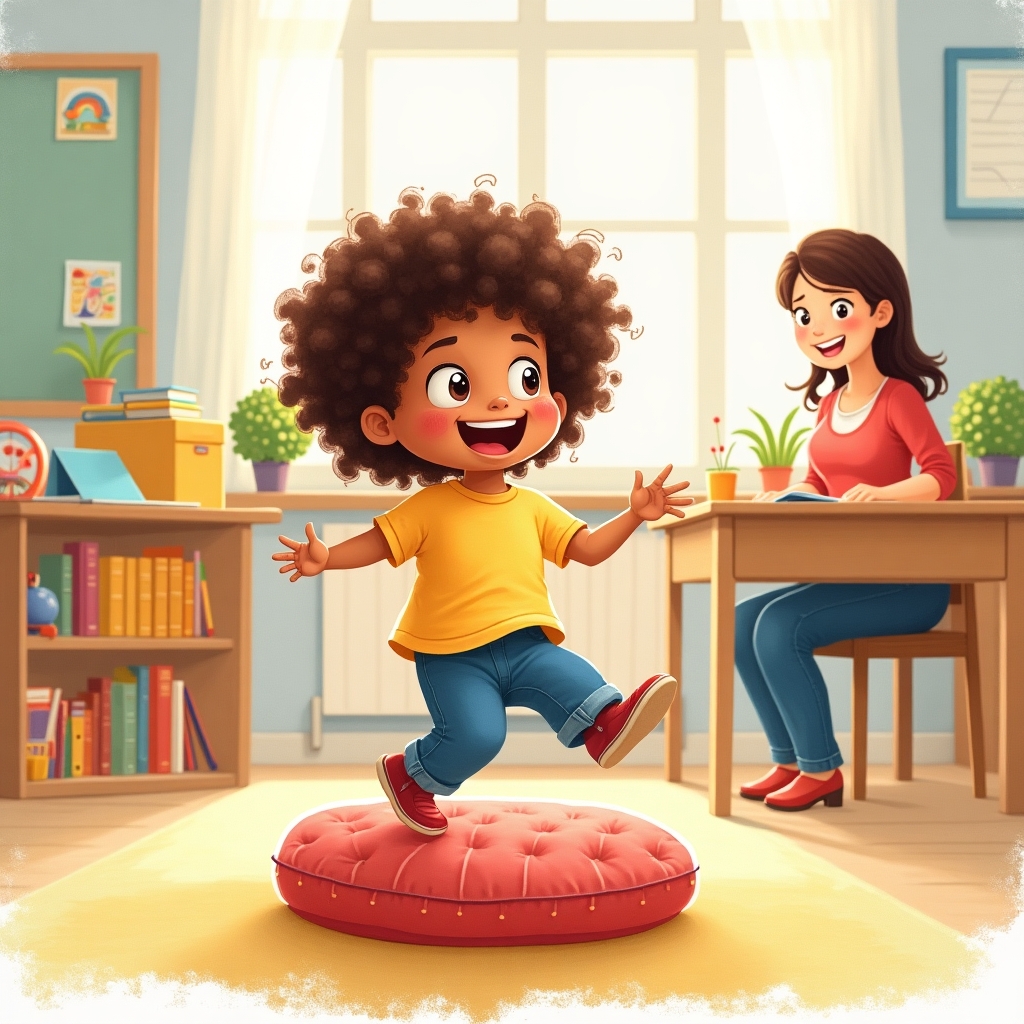
The Kid Who Couldn't Sit Still

The Kid Who Couldn't Sit Still

Dani wiggles. Always. Teachers say 'sit still.' But Dani's body needs to move. Finally, someone shows Dani that moving and learning can happen together.

The Words That Wouldn't Wait

The Words That Wouldn't Wait

Sam's words bubble up so fast they burst out before anyone else finishes. His words don't mean to be rude—they're just excited. Sam learns to hold them gently until it's his turn.

What Can My Hands Do Instead?

What Can My Hands Do Instead?

When Max gets mad, his hands want to hit. But hands can squeeze a pillow, push against a wall, or hold tight to a grown-up. Max learns his hands have choices.

Little Panda's Pushing Problem

Little Panda's Pushing Problem

When Ping gets frustrated, she pushes. She doesn't mean to hurt—her body just moves. Her dad teaches her to push against a wall instead, or squeeze her own hands tight.

But I Have Something Important to Say!

But I Have Something Important to Say!

Every time Mom talks, Chloe interrupts. She can't help it—her words feel SO important! Mom teaches her the 'squeeze and wait' trick.

I Am the Boss of My Anger

I Am the Boss of My Anger

Anger tries to take over Jayden's body. But with help from Uncle Ray, Jayden learns he's the boss—he just has to slow anger down long enough to prove it.

Articles

When Hitting Doesn't Stop: Strategies for Persistent Aggression

When Hitting Doesn't Stop: Strategies for Persistent Aggression

What to do when you've tried everything and the hitting continues.

Why Toddlers Hit (And Why It's Developmentally Normal)

Why Toddlers Hit (And Why It's Developmentally Normal)

Understanding the brain science behind toddler aggression.

7 Things to Say When Your Child Hits You

7 Things to Say When Your Child Hits You

In-the-moment phrases that stop aggression without escalating.

Teaching Kids to Use Their Words Instead of Their Fists

Teaching Kids to Use Their Words Instead of Their Fists

Building communication skills that replace physical aggression.

When Your Child Hits at School or Daycare

When Your Child Hits at School or Daycare

Partnering with teachers to address aggression outside the home.

Peer Pressure: Preparing Your Child to Make Their Own Choices

Peer Pressure: Preparing Your Child to Make Their Own Choices

How to raise a child who can resist negative influence.

When Sibling Fighting Gets Physical: How to Respond to Hitting, Pushing, and Aggression

When Sibling Fighting Gets Physical: How to Respond to Hitting, Pushing, and Aggression

What to do when conflict turns violent—and how to prevent it.

The Power of Giving Choices: How to Get Cooperation Without Power Struggles

The Power of Giving Choices: How to Get Cooperation Without Power Struggles

Why choices work, and how to offer them effectively.

How to Handle Back Talk and Disrespectful Behavior

How to Handle Back Talk and Disrespectful Behavior

Responding to rudeness without escalating or damaging your relationship.

Why Your Child Ignores You (And What to Do About It)

Why Your Child Ignores You (And What to Do About It)

The surprising reasons behind selective hearing—and strategies that work.

How to Give Effective Instructions (That Kids Actually Follow)

How to Give Effective Instructions (That Kids Actually Follow)

The difference between instructions that work and ones that get ignored.

When "Time-Out" Doesn't Work: Alternative Discipline Strategies

When "Time-Out" Doesn't Work: Alternative Discipline Strategies

Why time-out fails for some kids, and what to try instead.

The Art of Following Through (Without Becoming the Bad Guy)

The Art of Following Through (Without Becoming the Bad Guy)

Why consistency matters, and how to hold limits without constant conflict.

When Your Child Says "No!" to Everything: Navigating the Defiant Phase

When Your Child Says "No!" to Everything: Navigating the Defiant Phase

Understanding why "no" is developmentally important—and how to get through it.

7 Things to Say When Your Child Won't Listen

7 Things to Say When Your Child Won't Listen

Phrases that get cooperation without yelling, threatening, or repeating yourself.

How to Handle Tantrums in Public Without Losing Your Mind

How to Handle Tantrums in Public Without Losing Your Mind

Practical strategies for when meltdowns happen at the store, restaurant, or playground.

Tantrum vs. Meltdown: What's the Difference and Why It Matters

Tantrum vs. Meltdown: What's the Difference and Why It Matters

These two look similar but have different causes and need different responses.

Tantrums at 2 vs. 4 vs. 6: Age-Appropriate Expectations and Strategies

Tantrums at 2 vs. 4 vs. 6: Age-Appropriate Expectations and Strategies

What's developmentally normal at each age, and how to adjust your approach.

Why Your Child Has Meltdowns (And What's Actually Happening in Their Brain)

Why Your Child Has Meltdowns (And What's Actually Happening in Their Brain)

The neuroscience behind tantrums explained in plain language—and why knowing this changes everything.

Activities & Worksheets

Activities coming soon

Downloadable activities and worksheets for this topic.

Related Topics

Following directionsPatience & waitingAccepting "no"Honesty

How can we help?