Night Wakings: Why They Happen and How to Respond
Understanding what's waking your child and how to help them resettle.
Your child was sleeping through the night—and now they're not. Or they've never slept well, and you're exhausted. Night wakings are one of the most draining parts of parenting. Here's what helps.
Why Children Wake at Night
Everyone wakes briefly during the night—it's a normal part of sleep cycles. The difference is whether your child can put themselves back to sleep or whether they need you.
Common causes of night waking include:
**Sleep associations:** If your child falls asleep with you present (lying next to them, holding their hand), they'll need you present when they naturally wake between sleep cycles.
**Developmental leaps:** When children are learning new skills (walking, talking, potty training), sleep often suffers temporarily.
**Illness or teething:** Pain and discomfort interrupt sleep. This is usually temporary.
**Changes in routine:** Travel, new siblings, starting school, moving—anything that disrupts the norm.
**Nightmares:** These start around age 2-3 as imagination develops.
**Night terrors:** Different from nightmares—the child seems awake but isn't, and won't remember in the morning.
**Being overtired:** Counterintuitively, overtired children often sleep worse, not better.
How to Respond to Night Wakings
For Young Toddlers (1-2 years)
At this age, night wakings are often about learning to fall asleep independently.
If your child relies on feeding, rocking, or your presence to fall asleep, they'll need those same conditions when they wake at 2 AM. The long-term solution is helping them learn to fall asleep on their own at bedtime.
In the short term: Keep interactions brief, boring, and dark. Meet their needs (diaper, quick comfort) but avoid starting activities that wake them further.
For Preschoolers (3-5 years)
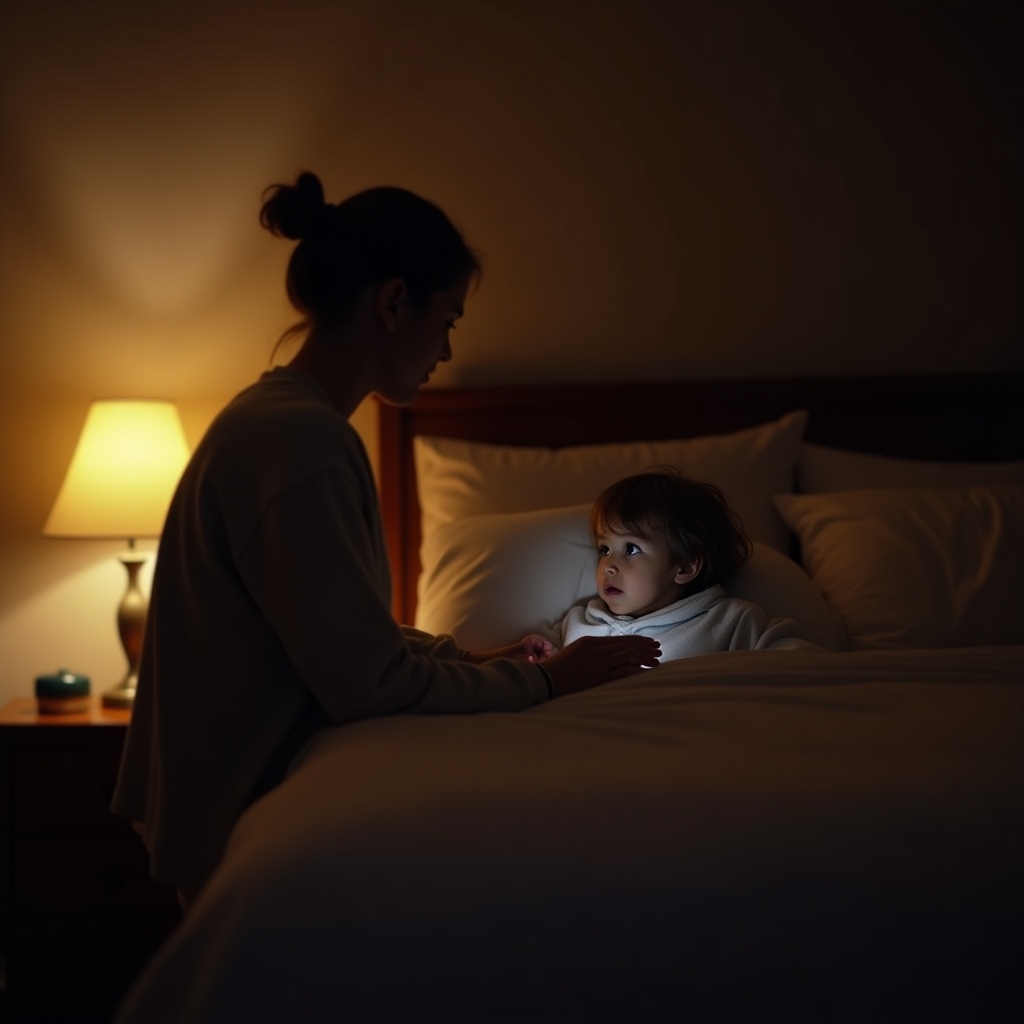
Preschoolers often wake because of fears, bad dreams, or wanting connection.
For fears: A brief reassurance and return to bed. "You're safe. I'm right here. Back to sleep."
For nightmares: Comfort them, but keep lights low and voices quiet. "That was a scary dream. You're safe now. Dreams can't hurt you."
For "I need you": Validate briefly, then hold the boundary. "I know you want me to stay. I'm going back to my bed. I'll see you in the morning."
For School-Age Kids (6-10)
By this age, most children can sleep through the night consistently. If they're waking regularly, investigate:
- Is something worrying them? Anxiety often shows up at night. - Are they getting enough physical activity during the day? - Is screen time too close to bed? - Are they actually tired at bedtime, or is bedtime too early?
A brief check-in is fine, but avoid long conversations in the middle of the night. "Let's talk about this in the morning."
Night Terrors vs. Nightmares
**Nightmares:** Your child wakes up frightened, can describe the dream, seeks comfort, and may be scared to go back to sleep.
Response: Comfort them, turn on a dim light, reassure them dreams aren't real, stay until they're calm.
**Night terrors:** Your child seems awake (eyes open, may be screaming or thrashing) but isn't responsive. They don't recognize you, can't be comforted, and won't remember it in the morning.
Response: Don't try to wake them. Keep them safe. Wait it out. Night terrors are more distressing for parents than for the child.
The "Check" Method for Older Toddlers and Preschoolers
If your child is waking repeatedly and calling for you, this method can help:
1. At bedtime, tell them you'll "check" on them. Then actually check—come back in 5 minutes. 2. If they wake at night calling for you, do a brief check: "I hear you. You're okay. Back to sleep." 3. Each time, keep it brief, boring, and reassuring. 4. Over time, checks become less necessary as they trust you'll come if truly needed.
The Early Morning Waker
If your child wakes too early (before 6 AM), consider:
- Is the room dark enough? Early light cues waking. - Are they hungry? A protein-rich bedtime snack can help. - Is bedtime too early? Try shifting it 15-30 minutes later. - Try an "okay to wake" clock that signals when it's morning.
When Night Wakings Might Need More Help
Talk to your pediatrician if: - Your child snores heavily or pauses breathing during sleep - Night wakings are accompanied by excessive daytime sleepiness - Your child seems to be in pain during sleep - Night terrors are very frequent - You're concerned about sleepwalking or sleep talking