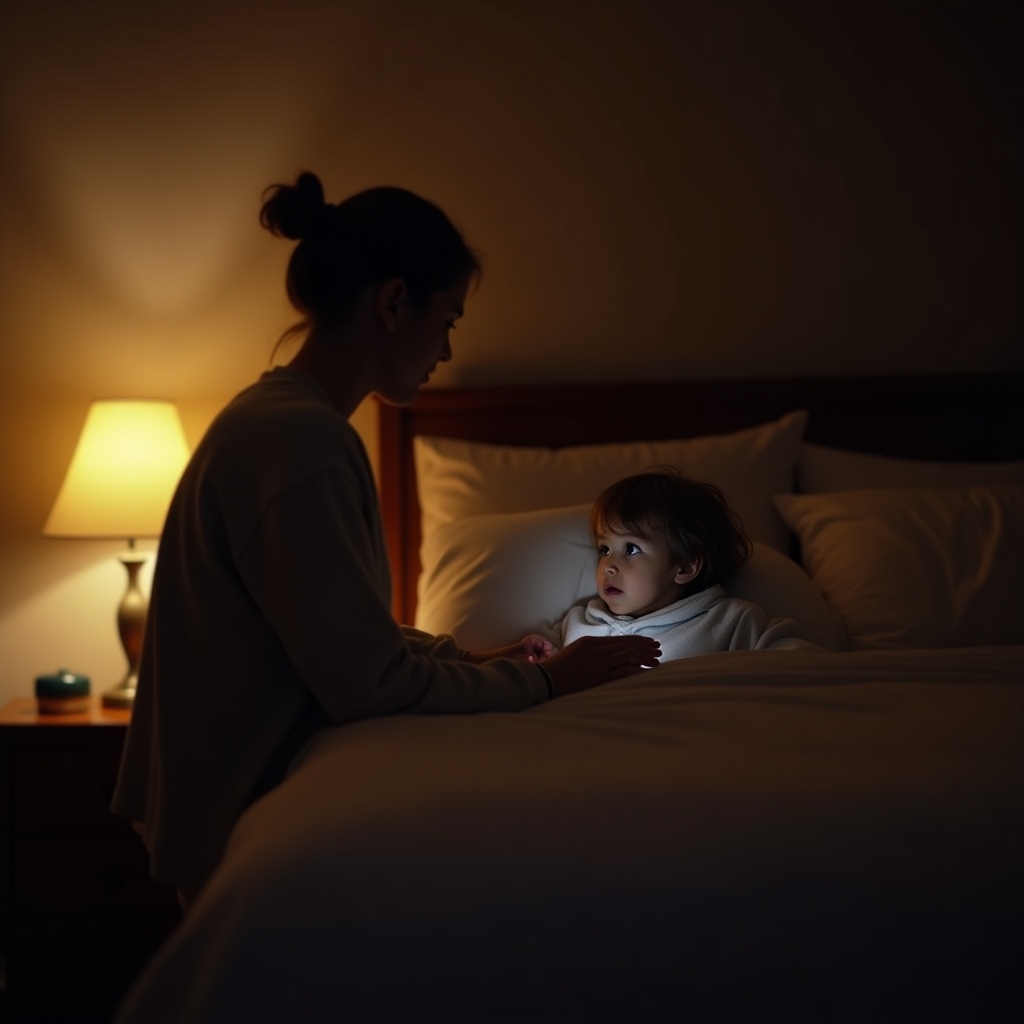
7 Things to Say When Your Child Won't Stay in Bed
Exact phrases for the endless bedtime requests and curtain calls.
You've done the routine. You've said goodnight. And now your child is up for the fifth time needing water, another hug, to tell you something important, or just because. Here are phrases that help.
1. "I love you. It's time to sleep. I'll see you in the morning."
This phrase does three things: affirms your love, states the expectation clearly, and reassures them that you'll still be there tomorrow. Keep your tone warm but firm. Say it the same way each time.
The consistency is key. If you engage differently each time they come out, you're teaching them that persistence pays off.
2. "Your body needs rest to grow and play tomorrow."
This connects sleep to things they care about. It's not arbitrary—there's a reason for bedtime. You're helping them, not punishing them.
3. "I'm going to be right here. You're safe in your room."
Separation anxiety often underlies bedtime struggles. This phrase addresses the fear without making it a big deal. You're not going anywhere.
4. "What's one good thing that happened today?"
Sometimes kids need help transitioning their mind from "awake mode" to "sleep mode." One brief, calm question gives them a positive thought to settle with. Keep it to one exchange—don't let it become a lengthy conversation.
5. "I hear you. The answer is still no. Time for sleep."
For the endless requests (more water, different pajamas, one more book), acknowledge that you heard them and hold the line. Validate briefly, then redirect.
6. "You don't have to sleep yet. You just need to stay in bed."
This reduces the pressure. Lying quietly in a dark room leads to sleep eventually. Fighting over whether they're sleeping creates stress that keeps everyone awake.
7. "I'll check on you in five minutes."
For anxious kids, this promise of your return can provide enough reassurance to relax. The key is actually following through—check on them quietly. Often they'll be asleep.
What to Avoid
**Don't negotiate.** "Just one more..." leads to endless "one mores."
**Don't threaten.** "If you come out again..." creates adversarial energy right before sleep.
**Don't engage at length.** Long conversations reward the behavior of getting up.
**Don't show frustration.** Your escalation escalates them.
The Bigger Picture
Most bedtime struggles are about one of three things: control (they want autonomy), connection (they want more of you), or fear (separation or darkness). Addressing the underlying need during the day often helps more than any phrase at night.