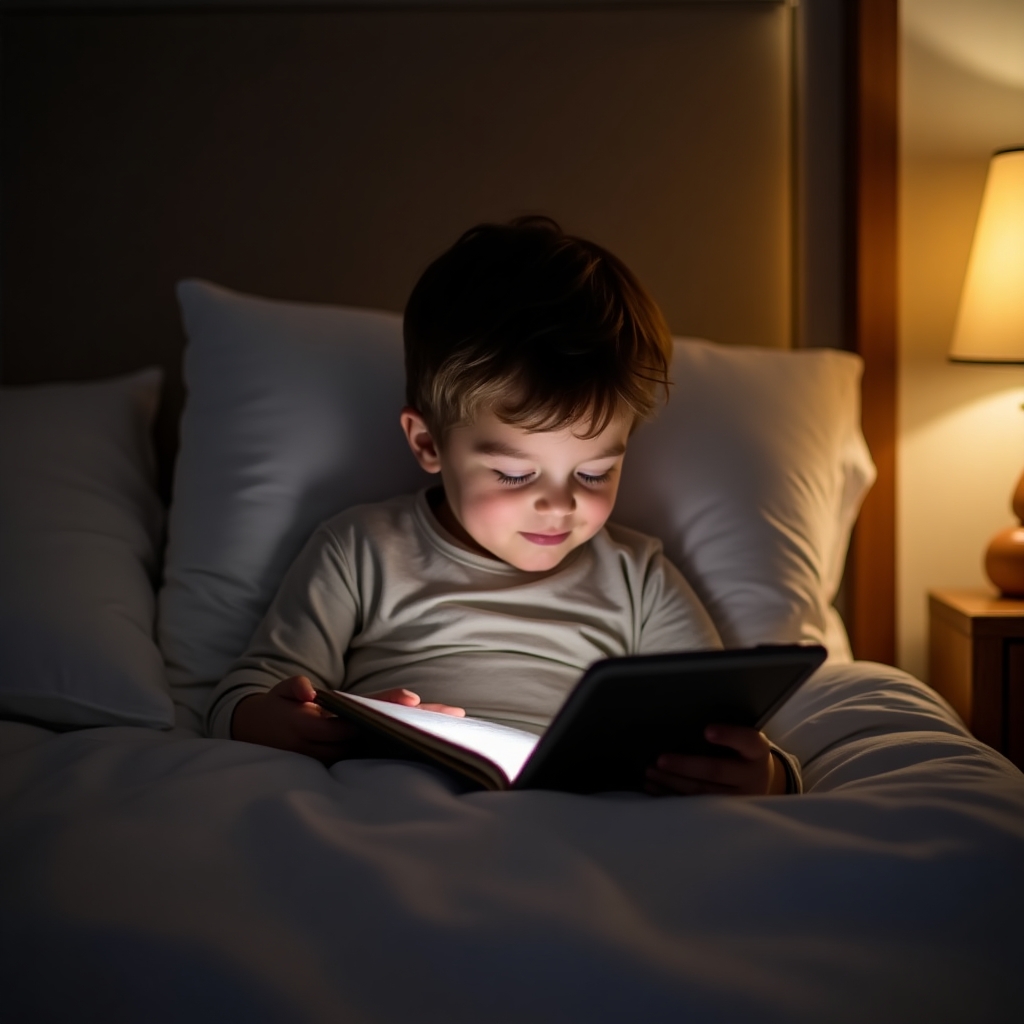
Screen Time and Sleep: What Every Parent Needs to Know
The science behind why screens disrupt sleep and practical strategies for your family.
You've probably heard that screens before bed are bad for sleep. But what does the science actually say, and what can you realistically do about it? Here's what matters.
What Screens Do to Sleep
Screens affect sleep in three main ways:
1. Blue Light Suppresses Melatonin
Screens emit blue light, which signals to the brain that it's daytime. This suppresses melatonin—the hormone that makes us sleepy.
When your child watches a tablet before bed, their brain is getting a "wake up" signal right when it should be winding down. Even if they seem tired, their body isn't producing the melatonin needed for quality sleep.
2. Stimulating Content Activates the Brain
It's not just the light—it's what's on the screen. Games, exciting videos, social interactions—all of these activate the brain and nervous system.
Asking a child to go from an exciting game to falling asleep is like asking them to sprint and then immediately nap. The brain needs time to downshift.
3. Screens Steal Sleep Time
This is the simplest effect: screen time displaces sleep time. Kids stay up later because they're engaged. They may not feel tired because of melatonin suppression. And the cycle continues.
What the Research Actually Shows
Studies consistently find: - Children who use screens before bed take longer to fall asleep - They sleep fewer hours overall - Their sleep quality is lower (less deep sleep) - These effects are dose-dependent—more screen time = bigger effects
The American Academy of Pediatrics recommends no screens for at least one hour before bed. The science supports this.
The Realistic Challenge
Knowing screens are bad for sleep is one thing. Actually limiting them is another.
Many families use screens in the evening because: - Parents need to make dinner, decompress, or work - Kids are tired and cranky without something engaging - It's an established habit that's hard to break - It's the only time for certain shows or games
These are real constraints. Perfect isn't the goal—better is.
Practical Strategies
Set a Screen Curfew
Pick a cutoff time—ideally 1 hour before bed, but even 30 minutes helps.
Make it concrete: "Screens off when the timer goes off" or "No screens after dinner."
Apply it to everyone. When parents follow the same rule, kids accept it more easily.
Create an Alternative
The hour before bed needs to be filled with something. Screens aren't just removed—they're replaced.
Low-stimulation alternatives: - Audiobooks or calm music - Coloring or drawing - Puzzles or Legos - Reading together - Bath time (for younger kids) - Playdough or sensory activities - Calm pretend play
The first few days of any screen cutoff are hardest. After a week, the new routine usually clicks.
Adjust Screen Settings
If screens must happen in the evening: - Enable "Night Shift" or "Night Light" mode (reduces blue light) - Lower brightness - Choose calm content (nature shows, slow-paced programs) - Avoid games, social media, or anything exciting
These adjustments don't eliminate the impact, but they reduce it.
Handle the Bedroom
The strongest recommendation: no screens in the bedroom. At all. For anyone.
When screens are in the bedroom: - Kids use them secretly - "Just one more video" is too tempting - The bedroom becomes associated with stimulation rather than sleep
Charge devices outside the bedroom. Use a regular alarm clock instead of phone alarms.
For Older Kids
Tweens and teens face the added challenges of social media and peer communication.
Strategies that help: - All devices charge in a central location at night (non-negotiable) - Clear expectations: no phones after X time - Model the same behavior yourself - Discuss why sleep matters—for mood, sports performance, school - Involve them in problem-solving: "How can we help you sleep better?"
When Screens Are the Crutch for Sleep
Some children fall asleep to videos or use screens to relax at bedtime. This creates a problematic association.
To break this: 1. Replace screens with audio only (audiobook, calm music, white noise) 2. Gradually reduce volume over time 3. Eventually transition to white noise or silence
This takes time but is worth it for better quality sleep.
A Note on Flexibility
Every family has bad days, sick days, travel days, and survival days. Sometimes screens happen at bedtime. That's okay.
What matters is the pattern, not the exception. Aim for good sleep hygiene most nights, and don't spiral when you fall short occasionally.
The Bottom Line
Screen time before bed genuinely affects sleep quality. The evidence is strong. But you don't need perfection—you need a realistic plan that works for your family.
Start with one change: screens off 30 minutes before bed. Build from there.