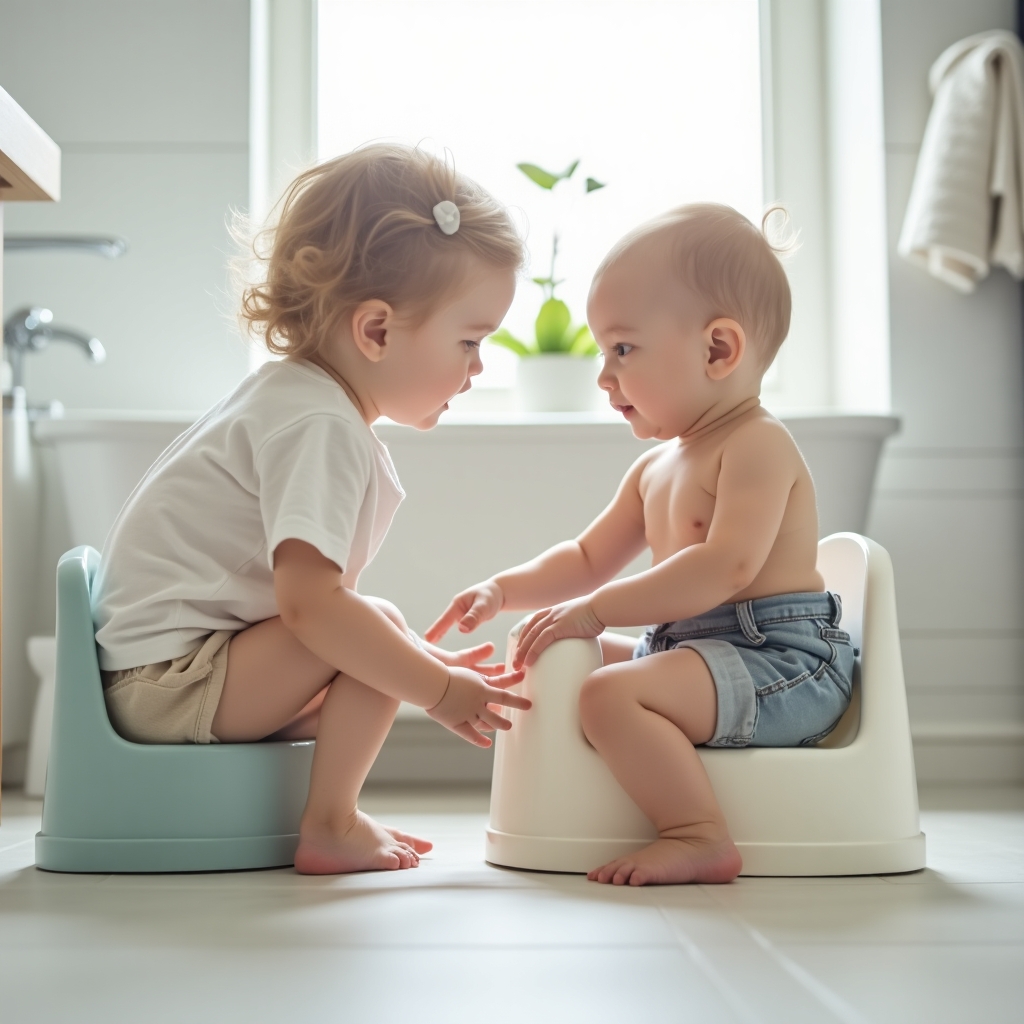
Potty Training Troubleshooting: Solving Common Problems
Practical solutions when potty training isn't going smoothly.
Potty training rarely goes perfectly. Here are solutions to the most common problems parents face.
Problem: Won't Sit on the Potty at All
Why It Happens
Fear, control issues, not ready, or negative associations.
Solutions
- Don't force—forcing increases resistance - Make the potty fun: special books, decorations - Let them sit clothed at first - Try a different potty (chair vs. seat insert) - Let them choose their own potty at the store - Back off and try again in a few weeks
Problem: Sits but Never Goes
Why It Happens
Not sitting long enough, timing is off, performance anxiety, or not actually ready.
Solutions
- Make sitting more comfortable (books, toys) - Try right after meals (natural timing) - Running water sometimes helps - Don't watch them intensely (give privacy) - Try a longer sit (5 minutes, not 30 seconds) - No pressure—celebrate sitting, not producing
Problem: Goes Right After Getting Off
Why It Happens
They held it while sitting (uncomfortable, anxious) and released after. Or they don't yet connect the feeling with the potty.
Solutions
- Keep them sitting longer - Distraction helps them relax - Try a more comfortable setup - Watch for signals and try to catch them mid-pee
Problem: Has Accidents Despite Knowing
Why It Happens
Being distracted (play, screen), not wanting to stop what they're doing, or not noticing signals yet.
Solutions
- Regular reminders (timer every 30-60 minutes) - Potty before transitions (before play, before eating) - Make the potty easily accessible - Praise for stopping play to use potty - Reduce distractions (no screens during training)
Problem: Does Great at Home, Accidents Elsewhere
Why It Happens
Different environment, less comfort, different potty, or being distracted by new settings.
Solutions
- Bring their potty seat when possible - Practice at different locations - Potty immediately upon arrival anywhere - More frequent reminders in new environments - Accept that this is normal and will improve
Problem: Refuses Underwear, Wants Diapers
Why It Happens
Diapers feel safe. Underwear feels vulnerable. Change is hard.
Solutions
- Let them choose their underwear (characters, colors) - Try training underwear (thicker, less leaky) - "Big kid underwear" might be motivating for some - If they're not ready, try again later - Don't shame—validate that change is hard
Problem: Pee Trained but Not Poop (covered in depth in separate article)
Quick Solutions
- Address constipation first - Use a stool for feet - Give privacy - Don't rush poop training—it often lags - Let them poop in pull-up if needed (gradually transition)
Problem: Trained Then Regressed (covered in depth in separate article)
Quick Solutions
- Stay calm—don't punish - Go back to basics - Address underlying cause (stress, illness, change) - Rule out medical issues - More support and connection
Problem: Won't Tell You When They Need to Go
Why It Happens
Not yet recognizing signals, not wanting to stop activities, or relying on you to ask.
Solutions
- Stop asking constantly (it becomes noise they ignore) - Teach them to notice body signals - Regular scheduled sits - Reward telling you, not just going - Give lots of fluid so signals are clearer
Problem: Will Only Go with One Parent
Why It Happens
Comfort, routine, or accidentally trained dependence.
Solutions
- Other parent takes over potty duty for a while - Gradual transition (both parents, then just one) - Keep approach consistent between parents - Don't make it a big deal
Problem: Hides to Have Accidents
Why It Happens
Privacy preference (normal for pooping), shame about accidents, or control.
Solutions
- Note where they hide and put potty nearby - Catch them mid-hiding and guide to potty - Don't shame—this is normal instinct - Give them privacy on the potty
Problem: Takes Forever on the Potty
Why It Happens
Enjoying the attention or books, avoiding something else, or actually trying to go.
Solutions
- Set a timer (5 minutes is enough) - Limit the entertainment - Matter-of-fact: "Potty time is over. Let's try again later."
Problem: Potty Training Has Become a Power Struggle
Why It Happens
Too much pressure, strong-willed child, or parental frustration escalating.
Solutions
- Back completely off for 2-4 weeks - When you resume, let them lead more - Reduce all pressure and emotion - Make it their achievement, not your victory - Consider a child-led approach
General Troubleshooting Principles
1. **Is the child ready?** Many problems stem from starting too early. 2. **Is there too much pressure?** Reducing pressure often solves resistance. 3. **Is there consistency?** Same approach, every time, everywhere helps. 4. **Is something else going on?** Illness, stress, and transitions cause setbacks. 5. **Are physical issues addressed?** Constipation, UTIs, and other medical issues need attention.
When to Seek Help
Consult your pediatrician if: - No progress after months of trying - Complete resistance or fear - Withholding poop for days - Pain during urination/bowel movements - Blood in urine or stool - Child is significantly distressed - You're significantly distressed
Potty training problems are common and solvable. Usually, patience plus small adjustments get things moving again.