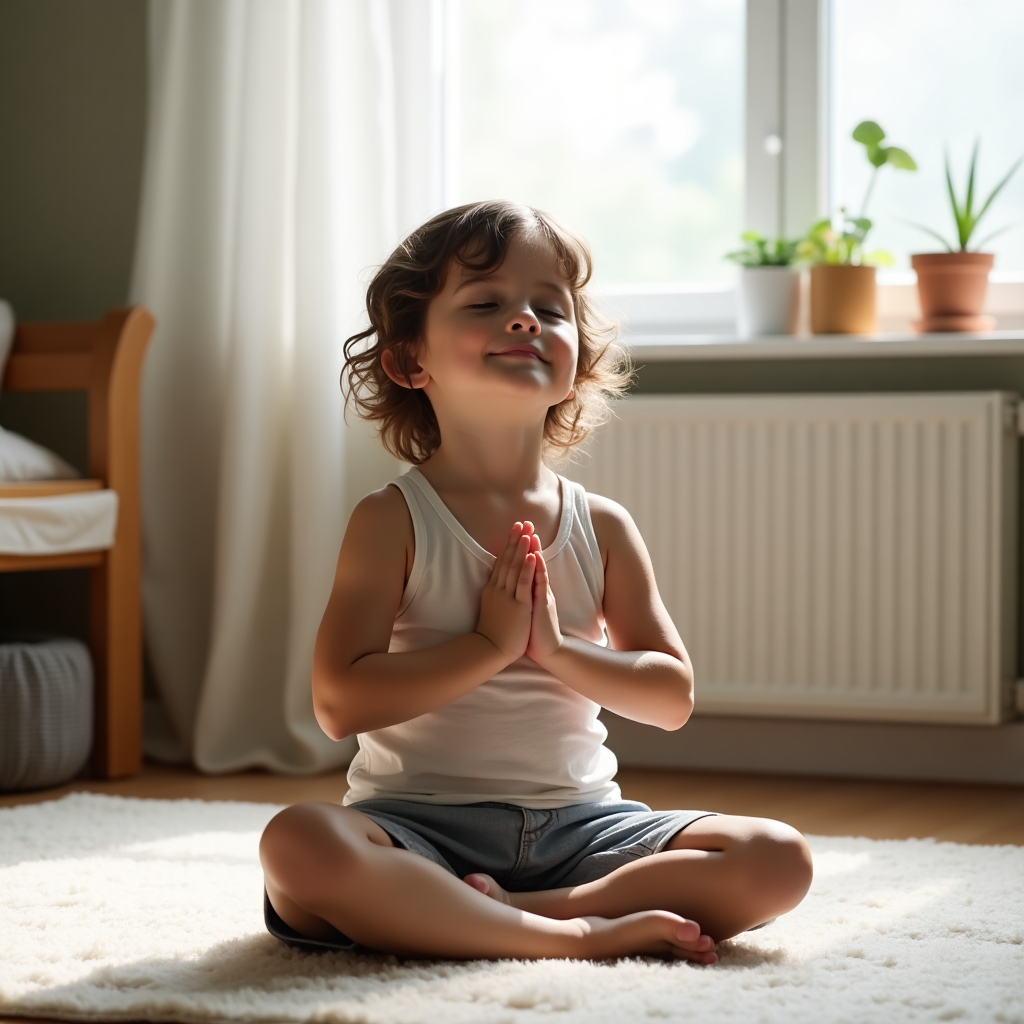
Calm-Down Techniques for Anxious Kids: What Actually Works
Practical strategies to help your child manage anxious feelings in the moment.
When anxiety hits, your child needs tools that work quickly. Here are techniques that actually help anxious kids calm down—and how to teach them.
Why Calming Techniques Matter
When anxiety activates the nervous system, the body goes into fight-or-flight mode. Heart racing, fast breathing, tense muscles—these physical symptoms can feel overwhelming.
Calming techniques work because they activate the parasympathetic nervous system—the body's "rest and digest" mode. By changing the body's state, you change the mind's state.
Breathing Techniques
Belly Breathing
Have your child place one hand on their chest and one on their belly. Breathe in slowly through the nose—the belly should rise while the chest stays relatively still. Exhale slowly through the mouth.
Why it works: Deep belly breaths stimulate the vagus nerve, which calms the nervous system.
4-7-8 Breathing (Older Kids)
Inhale for 4 counts. Hold for 7 counts. Exhale for 8 counts.
Why it works: The extended exhale activates the calming response.
Square Breathing
Trace a square in the air or on your leg. Breathe in for one side (4 counts), hold for one side (4 counts), breathe out for one side (4 counts), hold for one side (4 counts).
Why it works: The visual component gives anxious minds something to focus on.
Bubble Breathing
Pretend to blow bubbles—slow, steady exhales. Or use actual bubbles.
Why it works: Great for younger kids who struggle with abstract breathing instructions.
Grounding Techniques
5-4-3-2-1
Name 5 things you can see, 4 things you can touch, 3 things you can hear, 2 things you can smell, 1 thing you can taste.
Why it works: Engages the senses and brings attention to the present moment, interrupting anxious thoughts about the future.
Anchoring
Press your feet firmly into the ground. Notice the sensation of being held by the floor. Describe to yourself what your feet feel—pressure, temperature, texture.
Why it works: Connects to the present physical moment and creates a sense of stability.
Cold Water
Splash cold water on the face, hold ice cubes, or run cold water on wrists.
Why it works: The temperature change activates the dive reflex, which slows heart rate.
Touch Something
Keep a small object in your pocket—a smooth stone, a piece of soft fabric, a fidget. Focus on how it feels.
Why it works: Sensory input grounds attention in the present.
Body-Based Techniques
Progressive Muscle Relaxation
Starting at the toes and working up (or vice versa), tense each muscle group for 5 seconds, then release. Notice the difference between tension and relaxation.
Why it works: Releases physical tension the body is holding and increases body awareness.
Shake It Out
Stand up and shake the whole body—arms, legs, head. Get silly with it. Then stop and notice how the body feels.
Why it works: Releases tension and excess energy from the fight-or-flight response.
Wall Push
Push against a wall with both hands as hard as you can for 10-15 seconds. Rest. Repeat.
Why it works: Provides proprioceptive input that calms the nervous system.
Big Hug
Cross arms over chest and squeeze yourself tight. Hold for 10 seconds.
Why it works: Deep pressure is calming for many children.
Cognitive Techniques (For Older Kids)
Worry Detective
Ask: "What am I worried about? What's the evidence this will happen? What's the evidence it won't? What's the most likely outcome? What would I tell a friend who was worried about this?"
Why it works: Engages the rational brain to evaluate anxious thoughts.
Best/Worst/Most Likely
For a feared situation, ask: "What's the best that could happen? What's the worst? What's most likely?"
Why it works: Puts fears in perspective and builds realistic thinking.
Externalize the Worry
Give anxiety a name or character. "That's just Worry Monster talking. What does Worry Monster want me to think? Do I have to listen?"
Why it works: Creates distance between the child and their anxious thoughts.
How to Teach These Techniques
- **Practice when calm.** These skills need to be learned before they're needed. Practice during neutral moments. - **Model them.** Let your child see you using calming strategies. - **Make them accessible.** Create a visual list or calm-down card they can reference. - **Be patient.** Techniques take practice to become automatic. - **Find what works.** Not every technique works for every child. Experiment together.
A Note on Timing
Calming techniques are for managing the intensity of anxiety—not for avoiding it altogether. The goal is to get regulated enough to face the feared situation, not to make fear disappear.
Use techniques to take the edge off, then gently move toward what your child is anxious about.