The Gradual Retreat Method: Gentle Sleep Training That Works
A step-by-step approach to helping your child fall asleep independently without tears.
If your child needs you present to fall asleep—lying next to them, holding their hand, or staying in the room—the gradual retreat method can help you gently transition to independent sleep. It's slow, but it's gentle.
What Is Gradual Retreat?
Gradual retreat is exactly what it sounds like: you gradually move yourself farther from your child at bedtime until you're out of the room entirely.
Because changes happen slowly, your child barely notices each shift. There's minimal crying and no abrupt withdrawal of your presence.
Who Is This For?
This method works well for: - Children who require a parent present to fall asleep - Parents who want a very gentle, no-cry (or minimal-cry) approach - Families who've tried "cry it out" and found it didn't suit them - Children who are anxious or particularly sensitive to change
It's less suitable if: - You need a quick fix (this method takes 2-4 weeks) - Your child is under 18 months (they may not understand the incremental changes) - You're not able to maintain consistency night after night
The Step-by-Step Process
Week 1: Current Position, Less Interaction
Start where you currently are (lying with them, holding hands, whatever you do now). But gradually reduce engagement:
- If you talk, talk less. Then whisper. Then hum. Then silence. - If you touch, reduce touch. Full cuddle → hand-holding → one finger on their arm → hand nearby but not touching. - If you lie down, sit up. - Stay until they're asleep, but make yourself slightly boring.
Week 2: Move Slightly Away
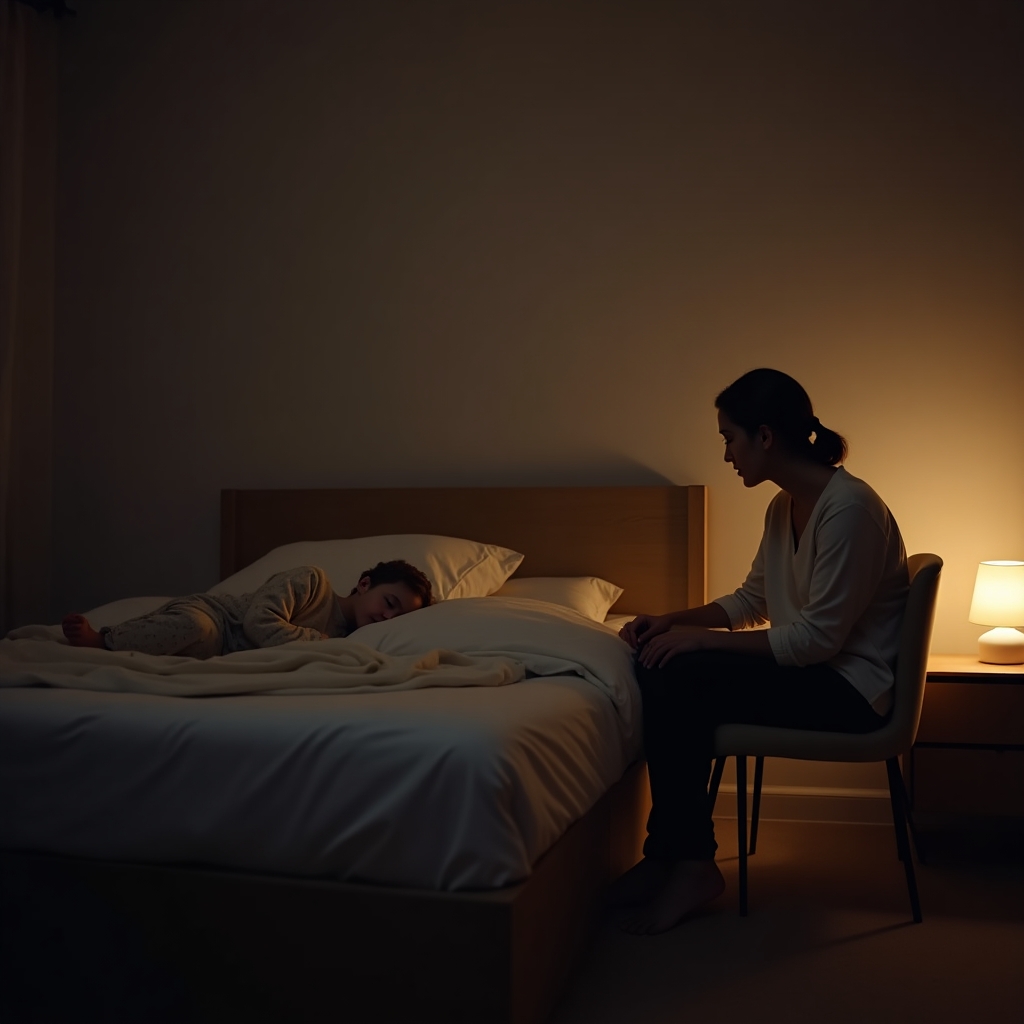
Move your position slightly—maybe to the edge of the bed instead of fully lying in it, or to a chair right next to the bed instead of on it.
Stay until they're asleep. Keep interaction minimal.
Week 3: Move Farther
Move your chair/position to the middle of the room. Then to the doorway. Always staying until they're asleep, but progressively farther away.
Week 4: Out of the Room
Move just outside the doorway (visible), then fully out of sight. You can tell them, "I'm going to check on something. I'll be right back." Then come back in a minute.
Gradually extend the time before you "come back" until they're falling asleep while you're gone.
Important Guidelines
**Move at your child's pace.** If a step causes significant distress, slow down. Stay at that level for a few more nights before moving on.
**Be boring.** The goal is for your presence to become uninteresting. Don't talk, sing, play, or engage. Just be there, calmly.
**Consistency matters.** Every night, same approach. Mixed signals slow the process.
**Handle protests calmly.** If they ask you to move closer, you can say, "I'm right here. I'm staying on my chair tonight. You're safe." Then don't engage further.
**Start with bedtime.** Once bedtime is solid, night wakings often improve on their own. If they don't, apply the same principle: whatever you did at bedtime is what you do at 2 AM.
What to Expect
**Night 1-3:** Adjustment. Some confusion or protest as they notice the change.
**Night 4-7:** Acceptance. They start to accept the new normal.
**Night 7-14:** Shift. Ready to move to the next step.
**Week 3-4:** Independence. They're falling asleep without you in the room.
Some children move faster; some need more time. Adjust based on your child.
Troubleshooting
**They keep getting out of bed:** Walk them back with minimal engagement. "It's bedtime. Back to bed." Repeat as many times as needed.
**They cry when you move:** Move back a step and go slower. Or try a comfort object as a bridge—something that "holds your love" while you move away.
**Progress reverses after illness/travel:** Temporary setbacks are normal. Go back a step or two, then progress forward again.
**One parent can do it but not the other:** Children often behave differently with different caregivers. The parent who struggles should follow the same method; it will work eventually.
The Payoff
Yes, this method takes patience. But the end result is a child who falls asleep peacefully, on their own, without tears or long negotiations. That's worth a few weeks of gradual work.