The Meltdown Toolkit: 10 Items That Help Kids Calm Down
Physical tools and sensory items that can help your child self-regulate.
Sometimes kids need something to do with their bodies when big feelings hit. A calm-down toolkit—a collection of sensory and soothing items—gives them concrete options. Here are ten items that actually help.
1. Stress Ball or Squeeze Toy
The physical act of squeezing and releasing provides proprioceptive input that calms the nervous system. Look for ones with different textures—bumpy, smooth, squishy—so your child can find what feels best.
How to use it: "When your body feels tight and angry, try squeezing this as hard as you can, then let go. Do it five times."
2. Weighted Lap Pad
Deep pressure is naturally calming for most children. A small weighted pad (1-3 pounds for young children) placed on the lap provides that grounding input without being restrictive.
How to use it: "Put this on your lap when you need your body to feel more settled."
3. Pinwheel
Pinwheels require slow, controlled exhales to spin—which is exactly the kind of breathing that activates the calming nervous system. It's breathing practice disguised as play.
How to use it: "Blow on the pinwheel slowly and make it spin. See if you can make it spin for a long time."
4. Feelings Faces Cards
Visual cards showing different emotions help kids name what they're experiencing. Naming feelings is the first step to managing them.
How to use it: "Can you find the face that matches how you feel right now?"
5. Noise-Reducing Headphones
For kids who get overwhelmed by sensory input, being able to reduce noise can prevent meltdowns or help during them. These don't need to play music—the noise reduction itself is soothing.
How to use it: "If things feel too loud and busy, you can put these on to make everything quieter."
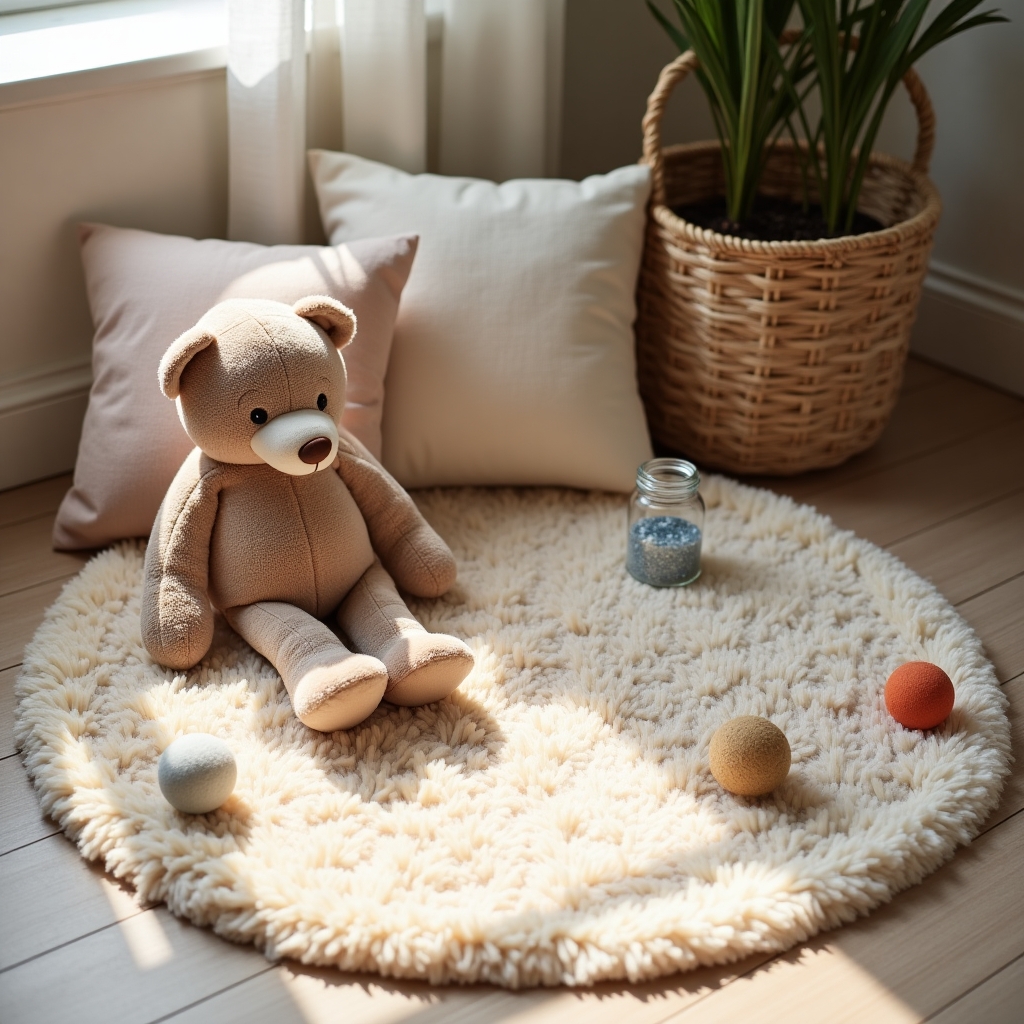
6. Glitter Jar or Snow Globe
Watching glitter settle is mesmerizing and models how big feelings can settle too. Shake it up, watch it swirl, breathe as it settles.
How to use it: "Your feelings are like the glitter—all swirling around. Let's watch them settle together."
7. Textured Fidget
Something to touch and manipulate keeps hands busy and provides sensory input. Options include textured rings, tangle toys, or fabric with interesting textures.
How to use it: Keep one accessible for moments when your child seems to need something to do with their hands.
8. Breathing Buddy (Stuffed Animal)
A small stuffed animal placed on the belly during deep breathing gives kids a visual to focus on. They watch it rise and fall with each breath.
How to use it: "Lie down and put the stuffed animal on your tummy. Can you make it go up when you breathe in and down when you breathe out?"
9. Kaleidoscope or View-Master
Visual distraction can help interrupt an escalating nervous system. Looking through a kaleidoscope or view-master shifts attention and naturally slows breathing.
How to use it: "When your brain feels too busy, try looking through this. See if you can find three different colors."
10. Chewable Necklace or Gum
For some children, oral sensory input is particularly calming. A chewable necklace or piece of gum provides that input safely.
How to use it: "If you need something to chew when you're feeling big feelings, this is for you."
Setting Up Your Toolkit
Keep items in a designated container or bag—a "calm-down kit." Let your child help choose what goes in it. Practice using each item during calm moments so they know how to use them when upset.
Place the toolkit somewhere accessible so your child can get it independently. Some families keep a travel version in the car.
A Note on What Works
Every child is different. Some love weighted items; others find them annoying. Some need movement; others need stillness. Pay attention to what actually helps your specific child, and customize accordingly.