Creating a Morning Routine That Actually Works
Building systems for smoother mornings.
Mornings don't have to be a battlefield. With the right routine, they can be... manageable. Maybe even pleasant. Here's how to build a morning routine that actually works.
Why Routines Matter
Routines reduce: - Decision fatigue (no one has to think about what comes next) - Power struggles (it's not you vs. them—it's just what we do) - Chaos (everyone knows the plan) - Nagging (the routine tells them what to do, not you)
Children thrive on predictability. Mornings are easier when they're automatic.
Building Your Routine
Step 1: Work Backward
What time do you need to leave? Work backward from there: - Leave time: 7:45 - Getting in the car, last bathroom: 5 minutes (7:40) - Shoes, coats, backpacks: 5 minutes (7:35) - Eating breakfast: 20 minutes (7:15) - Getting dressed: 10 minutes (7:05) - Bathroom, washing face, teeth: 10 minutes (6:55) - Wake up, transition to alertness: 10 minutes (6:45)
Add buffer. Things always take longer than you think.
Step 2: Identify the Bottlenecks
What slows you down most? - Getting out of bed? - Choosing clothes? - Eating breakfast? - Finding things?
Target your solutions at the actual bottlenecks.
Step 3: Move Everything Possible to the Night Before
- Clothes laid out (or decided) - Backpacks packed by the door - Lunches made - Permission slips signed - Breakfast decided (or prepped)
Every decision removed from the morning is a victory.
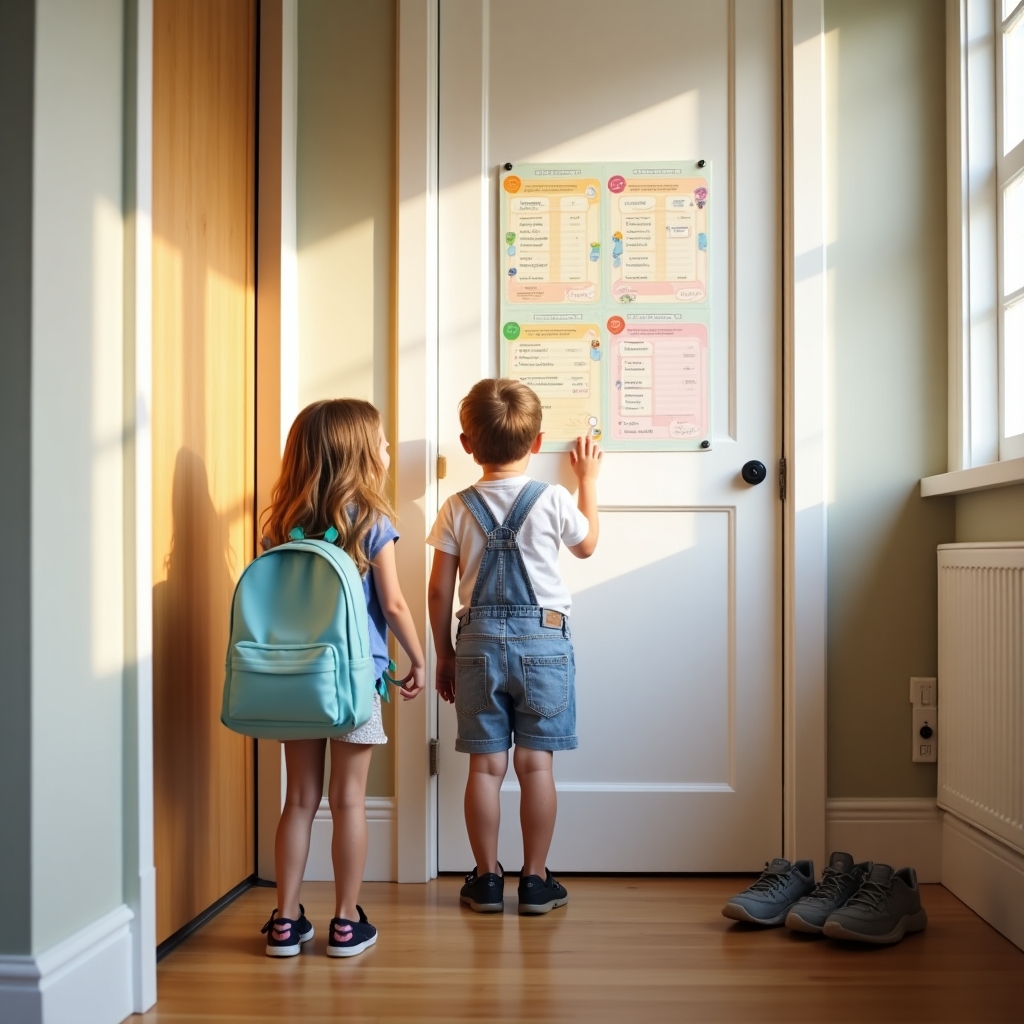
Step 4: Create a Visual Routine
For younger children, pictures work better than words: 1. 🛏️ Make bed 2. 👕 Get dressed 3. 🥣 Eat breakfast 4. 🪥 Brush teeth 5. 👟 Shoes and backpack 6. 🚗 Car
Post it where they can see it. The chart tells them what to do—you don't have to.
Step 5: Build in Connection
Mornings shouldn't be all logistics. Find a moment for connection: - Breakfast conversation - A hug before leaving - A brief snuggle after waking - A car ride chat
Connection makes cooperation more likely.
Routine by Age
Toddlers (2-3)
Keep it simple and do most tasks together. Visual schedules help. Expect to guide them through every step.
Sample routine: - Wake up, potty - Get dressed (with help) - Eat breakfast - Brush teeth (with help) - Shoes and coat (with help) - Go
Preschoolers (3-5)
Can do more independently but still need supervision and reminders. Visual charts are very helpful.
Sample routine: - Wake up, potty - Get dressed (clothes laid out) - Eat breakfast - Clear plate - Brush teeth - Get backpack - Shoes and coat - Go
School Age (6-10)
Can follow routines more independently. Checklists or charts help. May need accountability systems.
Sample routine: - Wake up, bathroom - Get dressed - Make bed - Eat breakfast - Clear dishes - Brush teeth, hair - Check backpack - Shoes, coat - Go
Tweens (10-12)
Should manage their own routine with minimal oversight. Alarm clocks, phone reminders, and natural consequences for forgetting things.
Your role shifts to backup, not manager.
Common Problems and Solutions
"They won't get out of bed"
- Move bedtime earlier - Open curtains for natural light - Use a gentle alarm or wake-up light - Build in snuggle time as incentive - Have a consistent wake time (even weekends, roughly) - Natural consequences: "If you're not up by 7, you'll have to skip screen time to get ready"
"Getting dressed takes forever"
- Lay out clothes the night before - Limit choices (two options max) - Keep wardrobe simple and interchangeable - Dress before breakfast (for some kids, the opposite works better) - Set a timer
"They won't eat"
- Have a go-to easy breakfast they like - Prep the night before - Consider grab-and-go options for hard mornings - Don't fight about food in the morning—offer it, move on - Some kids aren't hungry early; pack a bigger snack
"We can't find things"
- Everything has a home - Backpacks by the door, always - Launch pad: a specific spot for everything that goes to school - Permission slip/homework folder that gets checked nightly
"They get distracted"
- Reduce distractions (no screens until ready) - Stay nearby to redirect - Use timers for each task - "Beat the timer" games - Ensure enough sleep—tired kids can't focus
When Routines Fall Apart
Illness, travel, holidays—life disrupts routines. That's okay. Return to the routine as quickly as possible. The structure is always there waiting.
If your routine consistently doesn't work, troubleshoot: - Is there enough time? - Are expectations age-appropriate? - Is something else going on (sleep deprivation, anxiety)?
The Gradual Handoff
The goal is independence. Over years, you transfer more responsibility to them: - First, you do it for them - Then, you do it with them - Then, you supervise while they do it - Then, they do it independently
A 10-year-old managing their own morning routine is a 10-year-old building skills for life.